
From the outside, your life works
You meet deadlines.
You respond to messages.
You manage responsibility.
You’re reliable in crisis.
You don’t fall apart in public.
You’re capable.
And yet, there’s a quiet distance inside you.
You feel slightly removed from your own experience.
You don’t always know what you feel.
You don’t always know what you want.
Pleasure feels muted.
Rest feels uneasy.
You’re functioning.
But not fully inhabiting yourself.
Here, “high-functioning disconnection” describes that experience; it isn’t a diagnosis.
Being capable doesn’t mean you always feel connected to yourself.

When competence replaces contact
Many adults learned early that competence was stabilizing.
If the environment was unpredictable, being organised created a sense of control.
If emotions were overwhelming, being rational may have felt safer.
If love was conditional, being useful may have helped you secure belonging.
Over time, competence can become identity.
“I’m the strong one.”
“I’m the reliable one.”
“I’m the one who handles it.”
What slowly fades is contact.
Contact with sensation.
With spontaneous emotion.
With unfiltered desire.
With your own limits.
You become efficient at life.
But distant from yourself.
Holding feelings back can be subtle
Disconnection doesn’t always look dramatic.
You’re not necessarily numb.
You feel things.
But you filter them quickly.
You downplay disappointment.
You rationalize hurt.
You override fatigue.
You reframe anger into understanding.
This filtering becomes automatic.
You may have learned to treat certain emotions as inconvenient, destabilising or too much for others.
So you hold them back.
Containment requires energy.
Muscular effort.
Cognitive effort.
Physiological effort.
You may notice tension alongside the effort of holding things together.
Not crisis.
Just chronic bracing.
Success can hide how you’re feeling
High-functioning adults are often praised.
They achieve.
They adapt.
They don’t create problems.
But productivity doesn’t tell you how settled you feel.
You can be externally successful and still feel strained inside.
You may:
Struggle to relax without distraction.
Feel anxious in stillness.
Avoid intimacy without realizing it.
Overcommit without checking your limits.
From the outside, this looks like ambition or discipline.
From the inside, it can feel like restlessness.
Staying busy may have become one way to avoid feelings you don’t know how to meet. It isn’t the only possible explanation.
If you resonate with this pattern, you may also recognize the long-term strain of always holding it together.
You’re rarely the one being supported.
Rarely the one unraveling.
Rarely the one asking for help.
Over time, this creates isolation.
Not because you lack people.
But because few people see beneath your capability.
Ask yourself who sees you when you aren’t being useful. Who could you tell that you’re tired, without turning it into a joke or an apology?
When you’re always holding things together, you may have little room to soften.
The invisible framework beneath disconnection
High-functioning disconnection doesn’t appear out of nowhere.
It’s built on invisible rules.
Rules about worth.
About productivity.
About emotion.
About what makes you lovable.
These frameworks are often inherited quietly.
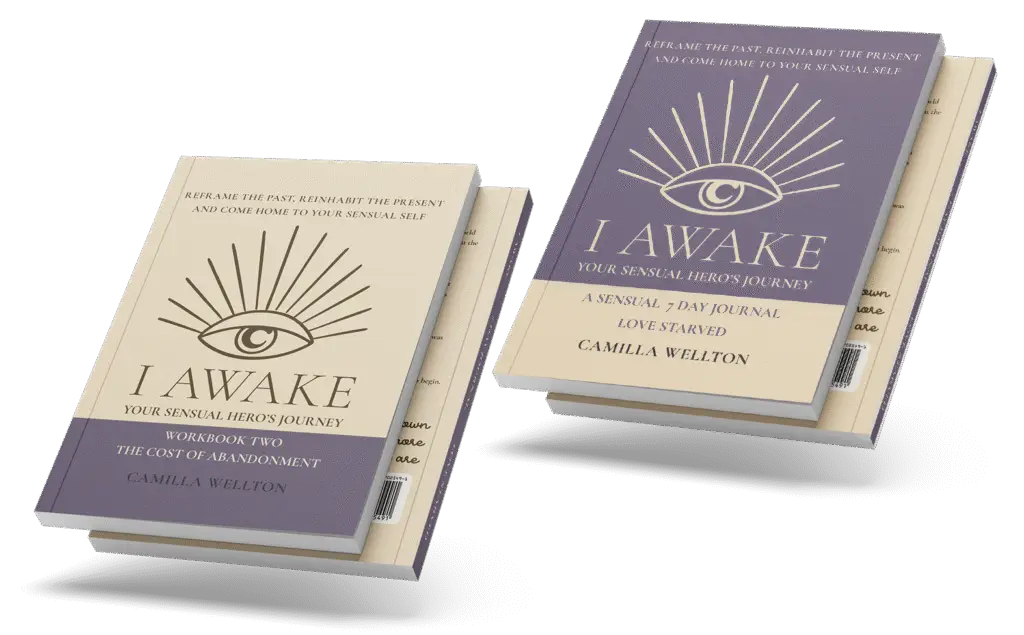
In That’s Not Me, the first guided Sensual seven-day journey, you explore the assumptions that have shaped your responses. The book and my recorded guidance work together through reading, writing, listening and practice, at your own pace. In the recordings, my voice is accompanied by music composed especially for the I AWAKE universe.
Noticing an old rule gives you a place to question it.
You may feel you’re choosing freely.
And still find that old expectations narrow your choices.
What self-neglect can feel like
Always putting yourself last can leave you feeling worn down, resentful or distant from what you want.
You might notice less room for pleasure or spontaneity. That experience deserves attention, without turning it into a claim about your hormones or a diagnosis.
The second destination of The Sensual Hero’s Journey™, Only Prey Pray for Praise, explores what happens when approval matters more than your own needs. The guided seven-day journey Living on Love Crumbs brings a book and my recorded guidance to that territory.
Begin with a recent moment. What did you need? What did you give instead? Was there room to say so?
Why high-functioning adults struggle to rest
Stillness removes distraction.
When you stop moving, you feel what you have postponed.
Fatigue.
Loneliness.
Unprocessed emotion.
For someone who built safety through productivity, rest can feel destabilizing.
Not because you dislike rest.
Slowing down may bring up feelings that busyness helped you postpone.
So you fill space.
With work.
With scrolling.
With helping others.
With optimizing.
You stay slightly activated.
Just in case.

You can stay capable and feel more connected
What reconnection can look like
It can begin quietly.
It doesn’t require quitting your job or dismantling your life.
It begins with contact.
Noticing your breath.
Pausing before agreeing.
Letting a boundary feel uncomfortable without retracting it.
Allowing sadness to move through without immediately reframing it.
These are small acts.
But they give you a chance to practise another response.
You can stay connected to yourself while remaining connected to others.
You can soften without losing value.
Many high-functioning adults believe they’re simply “wired this way.”
Driven.
Intense.
Independent.
Some of what you call wiring may be adaptation.
With more support and room to notice what you feel, your sense of yourself may widen.
You may still be competent.
Still responsible.
Still capable.
You may feel less braced.
Less isolated.
Less internally alone.
You don’t need to abandon your strength.
You need to bring your body back into it.
Embodiment doesn’t mean becoming less successful.
It means becoming more present.
It means feeling your yes and your no.
Knowing when you’re tired.
Recognizing when you’re hurt.
Allowing pleasure without earning it.
High-functioning disconnection isn’t failure.
It may describe a familiar way of coping. It doesn’t define who you are.
You’re allowed to want more contact.
More sensation.
More honesty.
More aliveness.
Not by reinventing yourself.
By returning to yourself.
If this is the pattern you’re meeting, That’s Not Me begins with the roles that can keep you capable while pulling you away from your own signals.
And that return begins in the body.