
The pressure to become someone else
Become more confident.
More secure.
More disciplined.
More expressive.
Less anxious.
Less reactive.
Less sensitive.
Reinvent yourself.
As if your current personality is a flawed draft.
But what if much of what you call your personality is actually a nervous system strategy?
What if you don’t need reinvention?
What if you need regulation?
Some traits begin as adaptations
If you describe yourself honestly, you might say:
I’m independent.
I’m intense.
I’m avoidant.
I’m a perfectionist.
I’m too emotional.
I’m too logical.
But many of these traits formed in response to environment.
Hyper-independence can grow from unreliable support.
Perfectionism can grow from conditional praise.
Emotional distance can grow from overwhelm.
Overthinking can grow from unpredictability.
These aren’t random personality quirks.
Some may be adaptations that helped you manage difficult circumstances. Personality has many influences; a familiar trait doesn’t tell you its cause.
A response that helped you once can become something you repeat.
Repeated for long enough, it can begin to feel like identity.
Why insight doesn’t automatically shift identity
You can understand your pattern.
You can say, “Oh, I do this because of my childhood.”
You can map your attachment style.
You can recognize your triggers.
And still react the same way.
Understanding a response and changing it in the moment aren’t always the same step.
If something still feels threatening, you may return to a familiar response.
Insight can help. So can practice, support and attention to what’s happening around you. You may need more than an explanation.
You’re not stuck.
You may need more time or a different kind of support.
How a wider range of responses can emerge
When you feel more settled and supported, a wider range of responses may become available.
You don’t force confidence.
You notice you speak without bracing.
You don’t force vulnerability.
You realize you stayed in a hard conversation without collapsing.
You don’t force discipline.
You notice you rested without guilt.
Identity begins to shift not because you declared a new version of yourself, but as you discover that a familiar defence isn’t your only option.
The hope is more room to choose.
You become more flexible.
Less rigid.
Less extreme.
More you.
The cost of always putting yourself last
Always overriding your needs can leave you exhausted. You may have become so practised at keeping things going that you barely notice what it costs.
That doesn’t let anyone read your hormone levels from your behaviour. Someone might feel anxious, distant or worn down for many reasons.
The second destination of the Sensual Hero’s Journey, Only Prey Pray for Praise, invites you to look at what you give up to keep approval or connection.
Start with something concrete. When did you last agree before checking whether you had the time or energy? What did you want to say?
You don’t have to decide that every familiar trait is a defence. You can simply notice which responses leave you feeling less able to live as yourself.
Regulation isn’t only about calming anxiety
It’s also about restoring access to pleasure.
When you’re chronically vigilant, pleasure may feel harder to access.
Joy feels unsafe.
Desire feels indulgent.
Rest feels irresponsible.
Living on Love Crumbs, the second guided Sensual seven-day journey, explores the ways you may settle for too little connection. Its book and my recorded guidance invite you to read, write, listen and practise noticing your needs. In the recordings, my voice is accompanied by music composed especially for the I AWAKE universe.
As pleasure becomes more welcome, you may notice parts of yourself that have had little room.
You may discover humor where there was tension.
Curiosity where there was control.
Warmth where there was distance.
You didn’t manufacture these traits.
You made room for them.
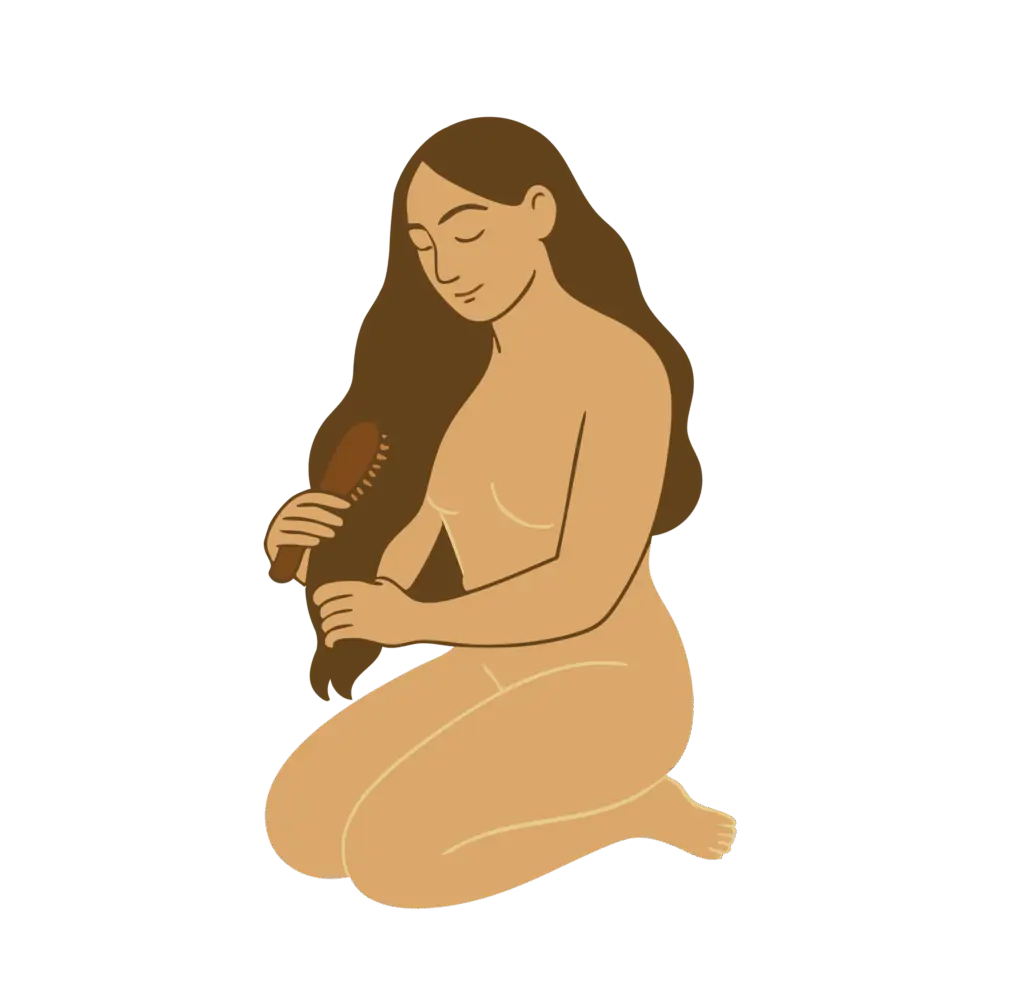
Reinvention is exhausting
Trying to become someone new can turn into another demand you place on yourself.
You push harder.
Override discomfort.
Force exposure.
Perform growth.
That pressure can make it harder to notice what you need.
Real transformation is quieter.
It looks like:
Staying in the body when you want to flee.
Letting emotion move without collapse.
Practicing boundaries repeatedly.
Allowing support.
Over time, you may find a little more room to respond.
The old personality traits that once felt permanent begin to loosen.
Not because you fought them.
As you find other ways to respond.
You don’t need a new personality.
You need:
More chances to feel settled and supported.
More flexibility between states.
More capacity for sensation.
More tolerance for closeness and rest.
With practice and support, you may begin to experience yourself differently.
You don’t wake up as a different person.
You may feel like a less defended version of yourself.
More available.
More responsive.
Less braced.
This can be a more sustainable kind of change.
Not dramatic.
Embodied.
And it begins not with self-critique.
But with nervous system care.