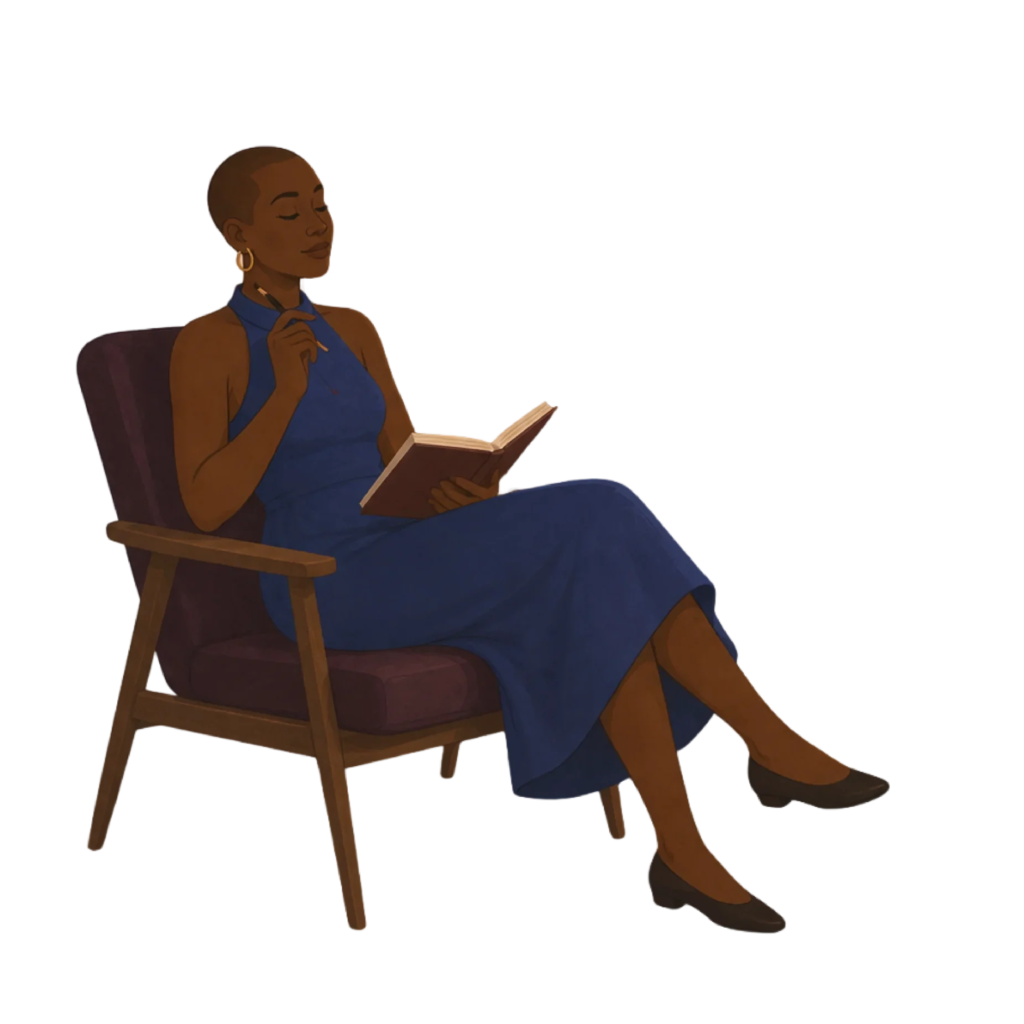
A conversation ends with a question worth returning to. A few days later, the person remembers part of it, finds the reading in another place and isn't sure what they wanted to bring back. The difficulty isn't necessarily a lack of interest. The context of the work has become scattered.

I AWAKE Practice is designed for that interval. Created within Camilla Wellton’s I AWAKE universe of books and guided practices, it brings selected resources, assignments and reflection into spaces organised around the work of a practitioner and client. Its published design connects I AWAKE material with the practitioner’s own resources, giving the question a place to continue between conversations.
Continuity here has a particular meaning: being able to find the relevant material, return to an agreed task and decide what belongs in the next conversation. The space supports the organisation of that work. The practitioner and client still determine its purpose, pace and relevance.
An individual space is intended to hold material selected for one client: a reading, practice, file, reflection or assignment. The selection can be narrower than a complete book or programme. A practitioner may want to stay with one question from a larger work while the client’s own situation provides its context.
Consider a person who often agrees to a request before noticing their preference. The practitioner might choose a relevant reading and ask them to describe an ordinary occasion before the next meeting. What was asked? What answer did they give? When did their own preference become noticeable? This imagined example begins with a situation the person can describe, rather than a conclusion about their character.
The reading and question give the person something to return to. Their reflection can develop before they decide what to bring back. The next professional conversation then has a particular encounter to examine alongside what the person now understands about it.
That sequence explains the relationship between the books and the platform. A book develops an extended inquiry. A practice space places selected material beside the work agreed with a particular person. The practitioner can draw on the larger framework without assuming that every client needs the same programme.
The published design includes cohorts for programmes, workshops and ongoing groups, alongside individual spaces. A cohort can organise common resources and a shared sequence of work. Where conversation between participants belongs in the programme, that is another choice about how the group will work together.
Access to a reading and access to a personal response are different decisions. Several people may be working with the same text while each has reasons to choose what they discuss. The platform’s model treats distributing material, reflecting and sharing as distinct parts of participation.
This matters beyond the individual or group setting. A person can engage seriously with a question without immediately having a formulation they want someone else to read. A first account may be unfinished, contradictory or uncertain. Giving reflection a place before disclosure preserves a useful stage between encountering a question and contributing to a conversation.
The reflection-sharing model distinguishes saving a reflection from sharing a version of it. Sharing is initiated by its author and directed to the practitioner associated with the space. The permission concerns that selected version and recipient, rather than treating access to a room as access to everything the client writes.
The version is significant. What a person chooses to share at one point is a particular formulation of their experience. Further writing may change how they describe the occasion or what they want to discuss. Keeping a shared contribution identifiable gives practitioner and client a clearer reference: which account is being considered, and what did the person choose to bring into the work?
The purpose is deliberate participation. Writing something down and offering it to another person serve different needs. The design gives each its own place without making the software responsible for interpreting the reflection or deciding what a professional conversation should conclude.
Practice’s stated resource model accommodates the practitioner’s own PDFs, recordings, images and handouts beside I AWAKE material. This gives an existing repertoire a place in the work, rather than requiring the practitioner to replace it with one publisher’s content.
Reusable templates are intended to provide a starting structure for another person or programme. The published approach allows the practitioner to change the order, remove what doesn't belong and add relevant material. The value lies in retaining a useful sequence without confusing reuse with a judgment that another person needs the same experience.
A template might hold the order of reading, trying and returning to a question. The material and pace still need to fit the person and the work agreed together. An exercise can invite attention; it can't decide in advance what the client should notice. The practitioner remains responsible for the appropriateness of the selection within their role.
This makes adaptation a substantive part of the platform’s proposition. The useful question is what can be carried forward from one piece of work and what must be reconsidered when the person or context changes. Saving a structure doesn't settle that question; it gives the practitioner something to examine and revise.
The platform’s published scope also includes sessions, availability, bookings, reminders, cancellations and recurring work. Calendar, video and session-payment connections depend on the supported services enabled for the particular setup.
These functions sit beside the reflective work because arrangements affect whether it can continue. An agreed task and a future session are different kinds of information, but they belong to the same practical context. Keeping their relationship visible is the design aim: the person knows what they are returning to, and the practitioner has somewhere to place what comes next.
A booking connection doesn't determine the content of a session, just as an assignment doesn't determine the client’s response. Professional judgment, agreements and responsibilities remain with the people doing the work. Current access arrangements, fees and the services configured for a particular practitioner need to be established for that setting.
Practice connects authored reflective material, adaptable professional spaces and explicit decisions about sharing. Its distinguishing proposition lies in how those parts support the passage from private inquiry to a chosen professional conversation.
That passage offers concrete questions for a demonstration or interview. How does a person recognise the task they are returning to? How does a practitioner adapt a sequence while retaining the client’s own judgment? How is a shared reflection version distinguished from other writing? What belongs in a group’s common material, and what requires a separate decision to disclose?
These questions make the design assessable through actual tasks and choices. Claims about time saved, engagement or professional outcomes would require evidence of use; they don't follow simply from bringing resources into one environment.
I AWAKE Practice is scheduled to open for pilots on 1 November 2026. As of 18 October 2026, Camilla Wellton reports that two psychologists and one coach are enrolled. This is the pilot opening; participant enrolment does not establish results from use.
For a press demonstration or questions about the pilot, contact Camilla with the aspect you would like to examine. Client records and private reflections are not press demonstration material.
For interviews, factual enquiries, press images or review-copy requests, contact Camilla Wellton. Include your publication, the subject you are covering and any deadline so that your request can be directed to the relevant material.
I AWAKE is created by Camilla Wellton. Its parent company is Swedish Institute of Inner Technology AB. Explore the universe and the parent company’s work through their respective websites.
The Sensual and Creative journeys show two different kinds of reader inquiry behind the professional setting. For questions about the pilot, its access terms or an interview, use the press request page.
Welcome to the I AWAKE universe. I'm Dawn and I'm your personal concierge. Ask me anything and I'll do my best to guide you in this space.